
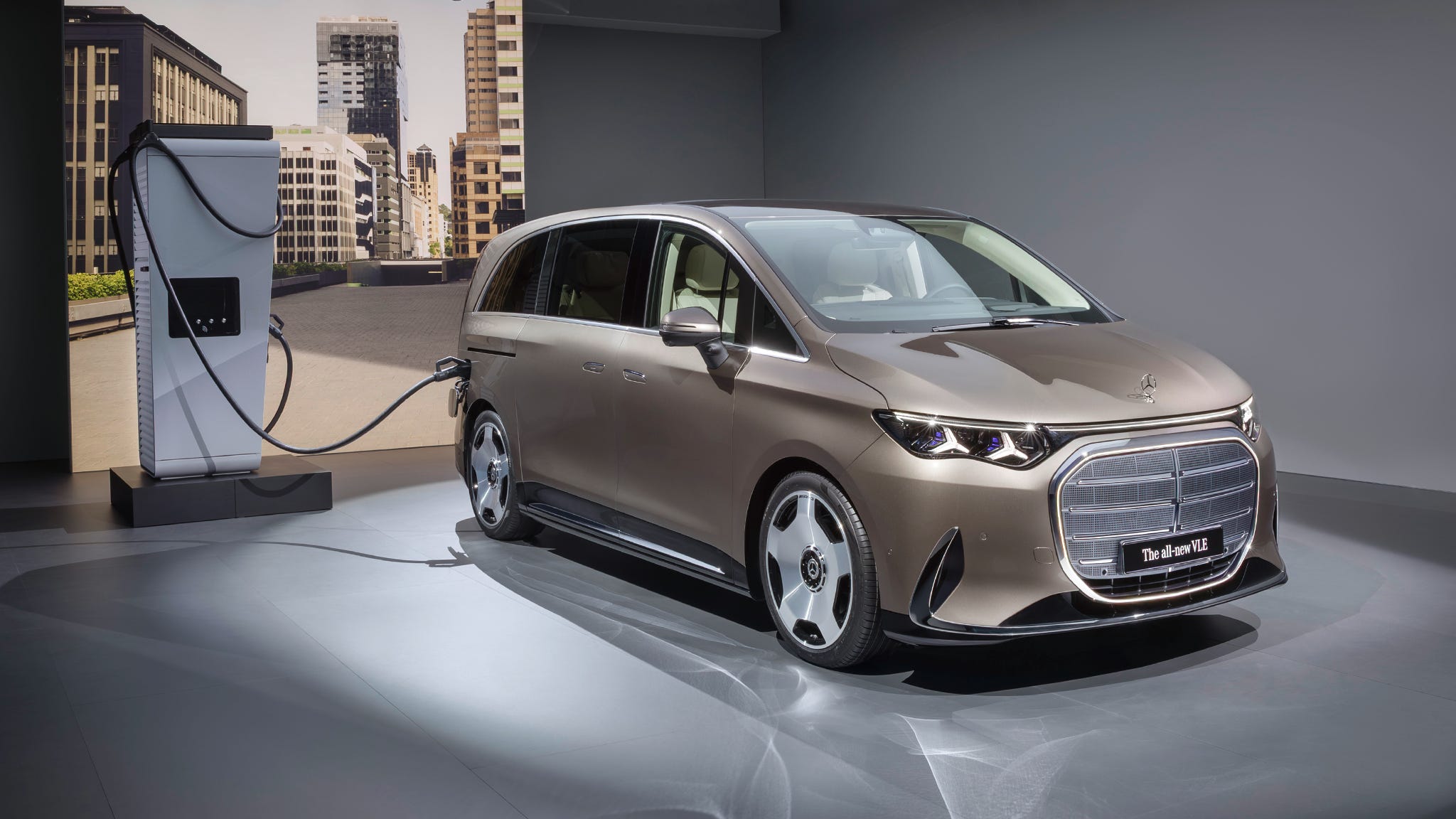


Mercedes-Benz just unveiled the VLE-Class, a fully electric passenger van it desperately wants you to call a “grand limousine.” It’s headed to North America in 2027, and it represents either the shrewdest luxury play in years or a spectacular misreading of a continent that spent three decades mocking minivans into near-extinction.
The numbers are real. The long-wheelbase VLE stretching to 215.9 inches — over 3 inches longer than a Cadillac Escalade — is the only version America will get. An 800-volt electrical architecture feeds a 115-kWh battery pack good for an estimated 360 miles of EPA range, and DC fast charging can add roughly 200 miles in 15 minutes.
The dual-motor VLE400 4Matic makes 409 horsepower. The front-drive VLE300 offers 268 hp. Neither is slow.
But the hardware isn’t the gamble. The gamble is cultural.
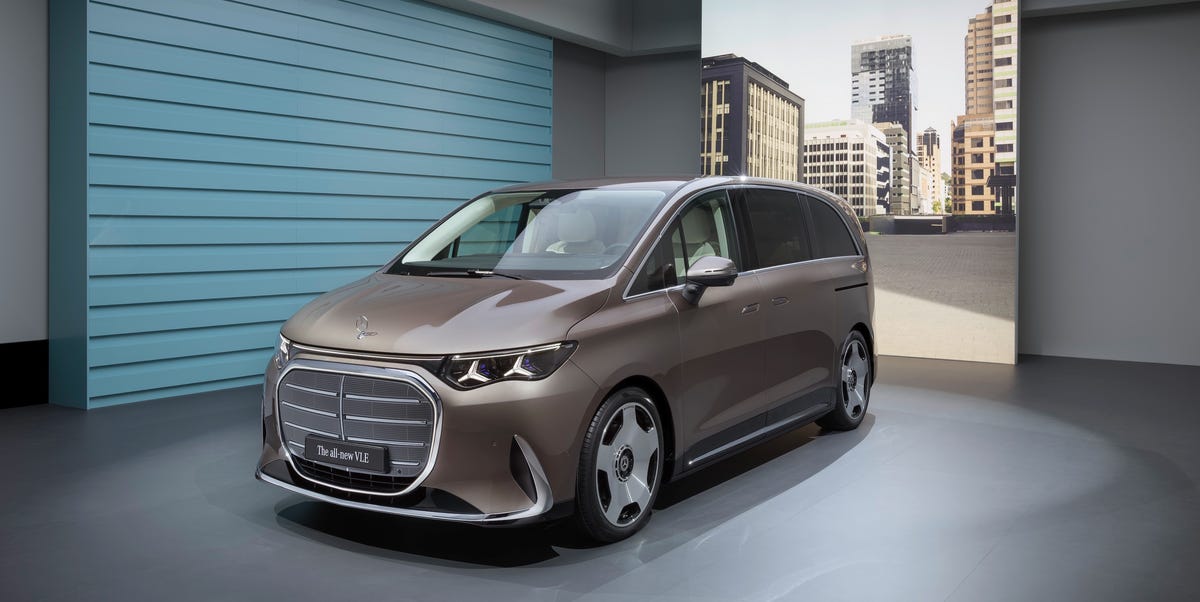
No luxury brand has ever sold a minivan in the United States. Not one. Cadillac never tried. Lincoln never bothered. The closest anyone came was the Oldsmobile Silhouette, and that brand is a headstone in GM’s cemetery.
Mercedes knows this history and is charging straight into it, armed with a 31.3-inch retractable 8K ceiling screen, Grand Comfort seats with massage and calf support, a scent atomizer, and a refrigerated center console.
The VLE is built on Mercedes’s new modular Van.EA platform, a clean-sheet electric architecture that will eventually underpin cargo vans in multiple sizes. Air suspension comes standard, adjusting ride height by 1.5 inches using navigation map data rather than just speed. Rear-axle steering turns up to 7 degrees, shrinking the turning circle to 35.8 feet — tighter than most sedans.
Inside, seating configurations run from utilitarian eight-passenger layouts to a four-seat executive suite with rear-facing lounge chairs and fold-out tray tables. Mercedes offers manually adjustable “Roll & Go” seats on integrated wheels that can be repositioned or removed entirely, plus fully electric seats controllable via app or voice. Pre-set modes toggle between maximum cargo, maximum legroom, and balanced configurations.
The front cockpit gets Mercedes’s MBUX Superscreen — three displays spanning the dash — and a virtual assistant trained on generative models. The optional rear entertainment screen drops from the headliner like something out of a Gulfstream, complete with a built-in camera for video conferencing.
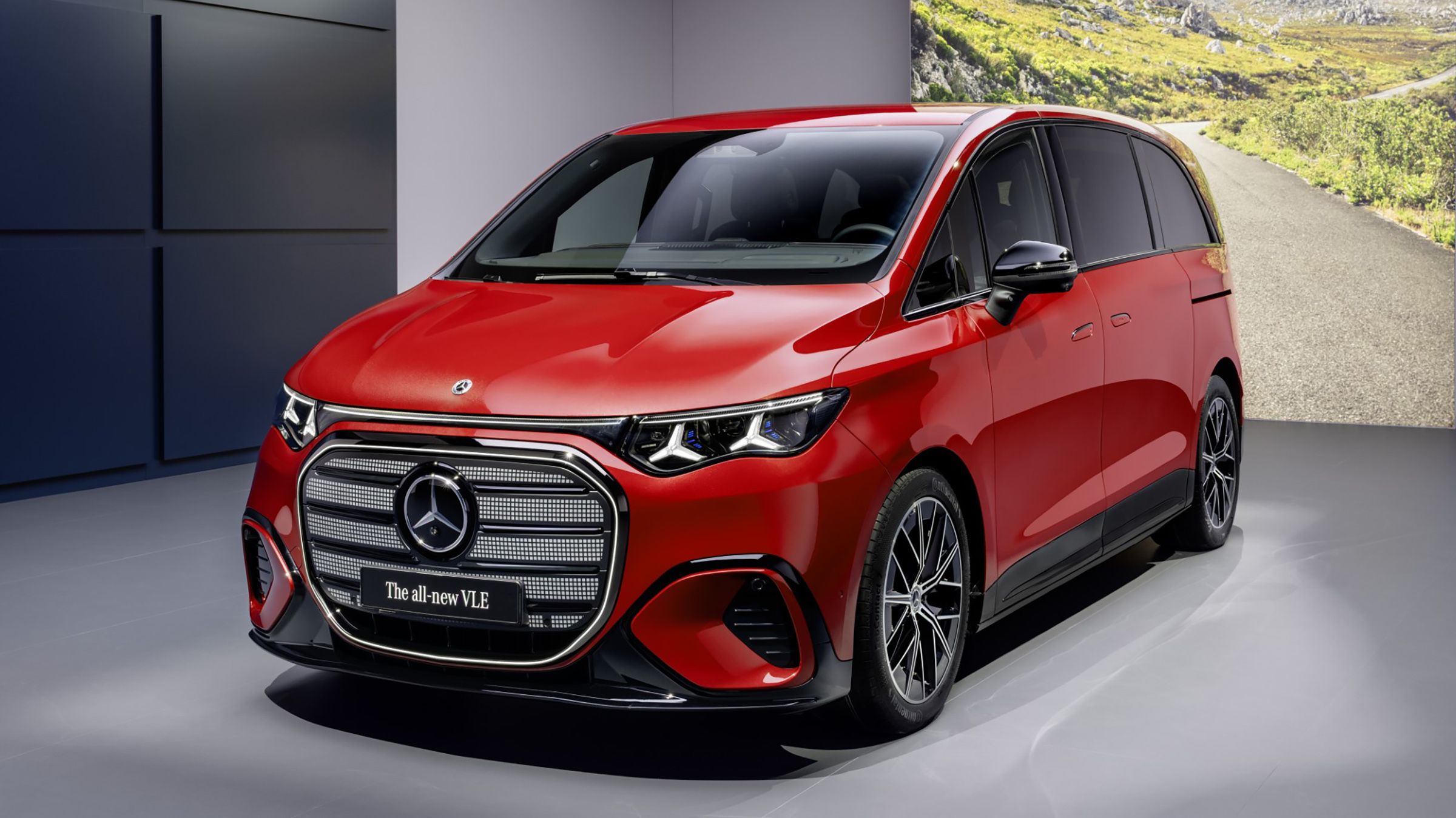
Mercedes is launching with the electric variants but has confirmed combustion powertrains — gas, diesel, and likely hybrids — will follow on a related Van.CA platform sharing 70 percent of parts. Those ICE models may actually matter more in North America, where Mercedes expects the strongest demand for non-electric versions. A smaller, cheaper VLE with an 80-kWh lithium iron phosphate battery is also planned for the U.S. after the initial launch.
Trim levels span four equipment lines and four option packages, with AMG Line, Exclusive, and Night Package variants. Wheels run from 19 to 22 inches. The towing capacity hits 5,511 pounds for the AWD model, which puts it squarely in SUV territory.
The drag coefficient of 0.25 is exceptional for a box this size — better than many sedans — and speaks to how seriously Mercedes engineered the body for efficiency rather than simply dressing up a commercial van.
Pricing hasn’t been announced, but the positioning tells you everything. This vehicle sits above the GLS in ambition and alongside the S-Class in interior intent. Mercedes is targeting the chauffeur-driven set, the executives currently being ferried in Escalades and Suburbans, and arguing that a purpose-built people mover makes more sense than a body-on-frame truck wearing a tuxedo.
China already buys this argument. Europe has for decades. The open question is whether Americans — who killed the minivan with social stigma and then replaced it with three-row SUVs that do the same job worse — are ready to pay six figures for a van with a three-pointed star on the hood. Mercedes is betting the star changes everything.


Share this Story