About This Nissan 370Z Build
We love featuring real builds from real owners. This Yellow Nissan 370Z sits on a set of 20-inch Work Emotion T7R 2P wheels, and the result speaks for itself.
The owner chose Work for a reason. This brand delivers serious quality and a design language that turns heads at every car meet. We see hundreds of Nissan 370Z builds come through WheelFront every month, but this one stands out. The combination of the Yellow exterior with the Work Emotion T7R 2P creates a look that balances aggression with elegance.
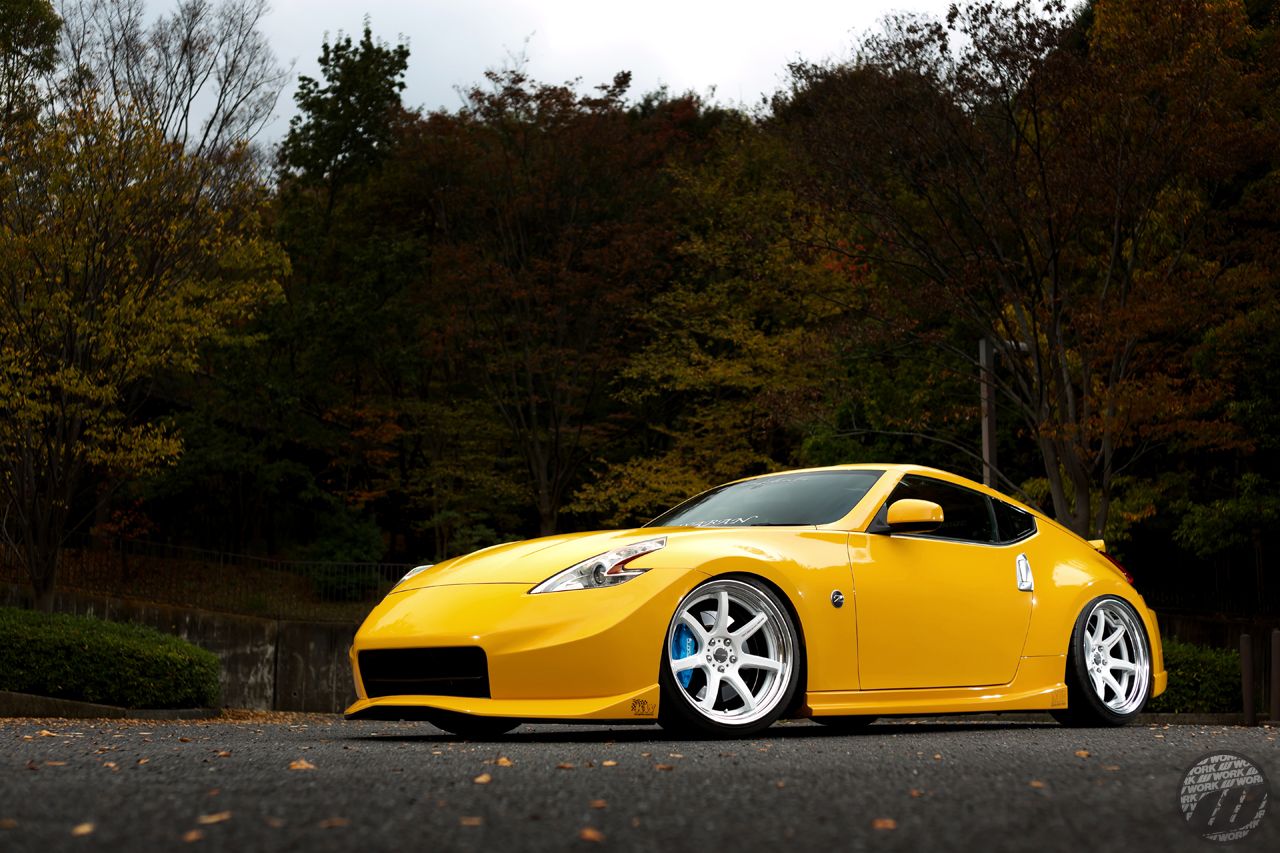
Fitment Breakdown: Work Emotion T7R 2P on the Nissan 370Z
I walked up to this Z at the show and the first thing that hit me was the stance. The Work Emotion T7R 2P wheels in 20-inch sizing fill the massive 370Z arches perfectly. These wheels offer a unique two-piece construction that really changes the game for this chassis.
We see a lot of guys running 19s, but the 20s provide that aggressive, high-end look this car deserves. Because the T7R 2P features a stepped lip, you get a deep, reflective barrel that adds serious depth to the profile. The proportions look intentional rather than oversized.
Caliper clearance is always a concern with the Z’s big Akebono brakes. Thankfully, the Work design accounts for these beefy calipers without needing annoying spacers. The spoke curve clears the face of the brake housing with room to breathe.
The offset here sits right at that flush threshold we all chase. We kept the outer lip tucked just inside the fender line to avoid cutting tires on bumps. You get that wide, planted look without ruining your paint with rock chips.
Hub bore fitment is spot on for the Nissan hub. You do not want to mess around with cheap hub-centric rings that shake at high speeds. These wheels sit dead center and track true through every corner.
The suspension setup is dialed in on coilovers with a slight drop. That lowering helps negate the wheel gap that usually plagues stock Zs. Without the drop, these 20s might look like a wagon, but here they look like a track-prepped monster.
Watch out for the rear inner fender liner if you decide to go wider on your rubber. We saw a tiny bit of rub at full compression during aggressive testing. A quick roll of the rear fenders solves that problem permanently.
What We Recommend for Nissan 370Z Owners
If you want this look, stick to a staggered setup. The 370Z handles best with a wider footprint in the back to put the power down. We recommend 9.5-inch widths up front and 10.5 or 11-inch widths in the rear.
Finding the right offset is the secret sauce for the Z platform. You want something in the +15 to +25 range for that flush aesthetic. Anything higher than that will look sunken and weak against the wide rear haunches.
Do not overthink your tire choice. A slight stretch looks great, but don't sacrifice your contact patch for vanity. We prefer a high-performance summer tire that fills the gap between the rim and the road.
Many guys make the mistake of buying wheels that are too narrow for the car. The 370Z has a wide body that demands aggressive wheel specs. If you buy a weak offset, you will spend a fortune on spacers just to make it look decent.
We always suggest checking your alignment specs after install. Negative camber is your friend when you run larger wheels on a lowered chassis. It keeps the tires away from the fender edge while improving your turn-in response.
Style and Build Analysis
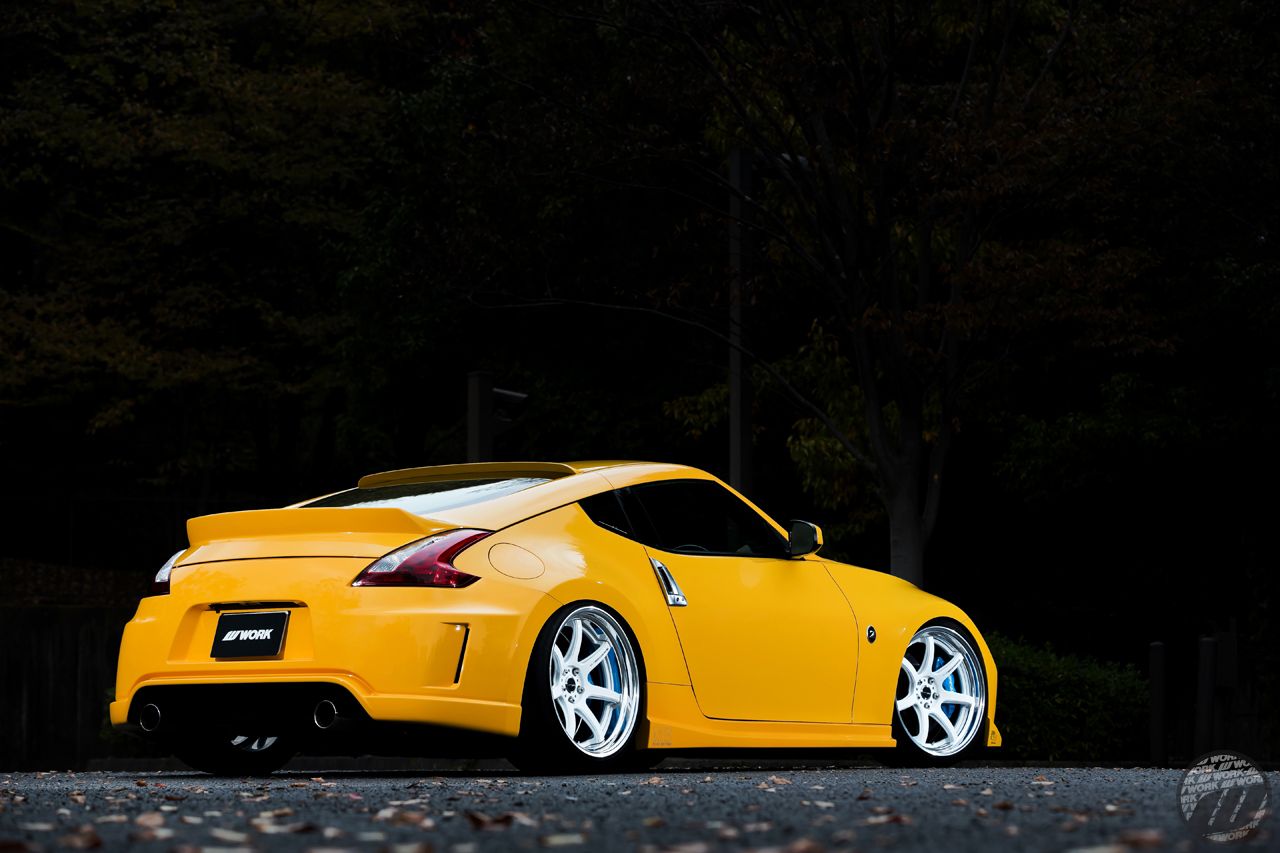
The yellow paint on this Z is loud, and the T7R 2P wheels balance that energy perfectly. The metallic finish on the wheels creates a sharp contrast against the bright, warm body color. It looks like a factory special edition, only much meaner.
The seven-spoke design of the T7R is a modern classic for a reason. It looks fast even when the car sits parked under the lights. The 2P construction adds an industrial vibe that matches the Z’s chunky, muscular frame.
Proportionally, these wheels dominate the visual weight of the car. They draw your eye directly to the center of the chassis. It makes the car look lower and wider than it actually is.
We have featured plenty of Z builds, but this one feels cohesive. Many builds go overboard with mismatched parts that ruin the car's natural lines. This owner kept the vision clean and executed the hardware choices with precision.
The road presence is undeniable when this thing rolls down the strip. You can see the wheels spinning and the light hitting that stepped lip. It commands respect without needing a massive wing or a ridiculous body kit.
Why We Love This Build
This yellow 370Z captures everything we love about tuner culture. The sun hits that bright paint and the Work wheels glow with a clean, mechanical intensity. It sits perfectly over the rubber, proving that you do not need to slam a car into the dirt to make it look aggressive. Every time we walk past it, we have to stop and stare at how the spokes tuck into the fenders. It is a masterclass in clean, functional aesthetics that turns a great platform into a total icon. This is exactly how a Z should look when it leaves the garage. Do it right, and the car speaks for itself.
Full Specs Breakdown
Here is exactly what this owner is running. We break down every detail so you can replicate this build or use it as a starting point for your own setup.
- Car Make & Model: Nissan 370Z
- Vehicle Color: Yellow
- Wheel Brand & Model: Work Emotion T7R 2P
- Wheel Size: 20
- Offset: Contact dealer
Before You Buy: Fitment Checklist
We talk to Nissan 370Z owners every day. These are the questions we hear most before they pull the trigger on new wheels.
Will 20-inch wheels fit my Nissan 370Z? Yes, but fitment depends on width, offset, and tire size working together. A wrong offset means rubbing. A wrong tire size means poor handling. Always verify all three.
Do I need to modify my fenders? That depends on your offset and suspension. A conservative offset with stock ride height usually fits without modification. Go aggressive and you may need to roll or pull your fenders.
Can I daily-drive this setup? Absolutely. Thousands of Nissan 370Z owners run 20-inch wheels every day. The key is choosing the right tire with enough sidewall to absorb road imperfections.