
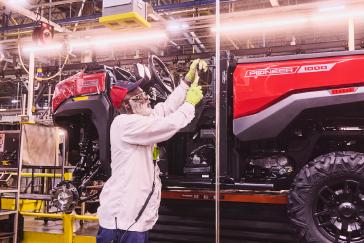


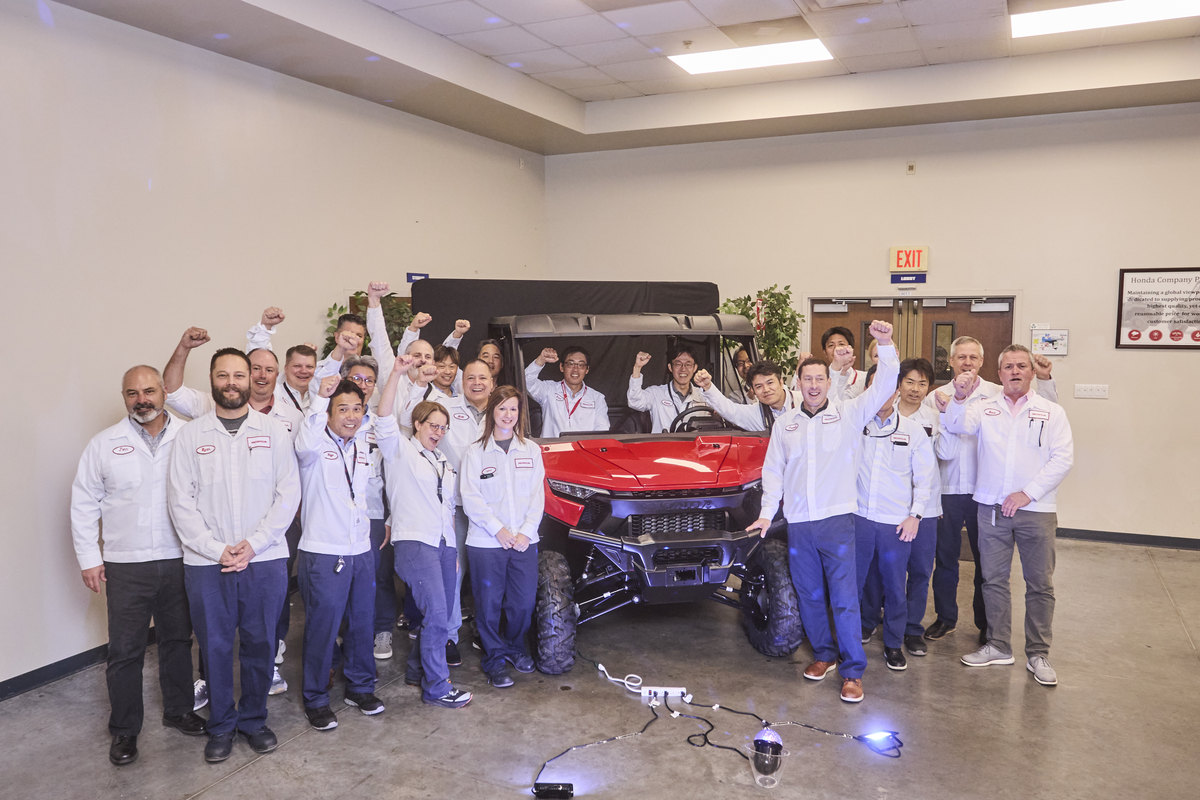
Nearly 3.9 million powersports products have rolled out of a factory in Timmonsville, South Carolina — a rural town of about 2,100 people. On April 24, Honda threw a party there for number 3,900,001-and-counting: the 2026 Pioneer 1000 Deluxe, a side-by-side that represents the most significant overhaul the Pioneer platform has seen in years.
About 700 workers gathered in the 850,000-square-foot plant to mark the occasion. Honda’s South Carolina facility is the exclusive global production home for every side-by-side the company sells — Pioneer utility models and Talon sport rigs alike. That’s a staggering concentration of responsibility for a single plant in a town most Americans couldn’t find on a map.
The numbers tell a story Honda clearly wants told right now. More than $460 million invested over roughly 28 years. A supply chain that touches Ohio for development, Georgia for planning, and South Carolina for final assembly using domestic and globally sourced parts.
In a political climate where “made in the USA” carries currency well beyond marketing, Honda is leaning into its American manufacturing footprint hard.
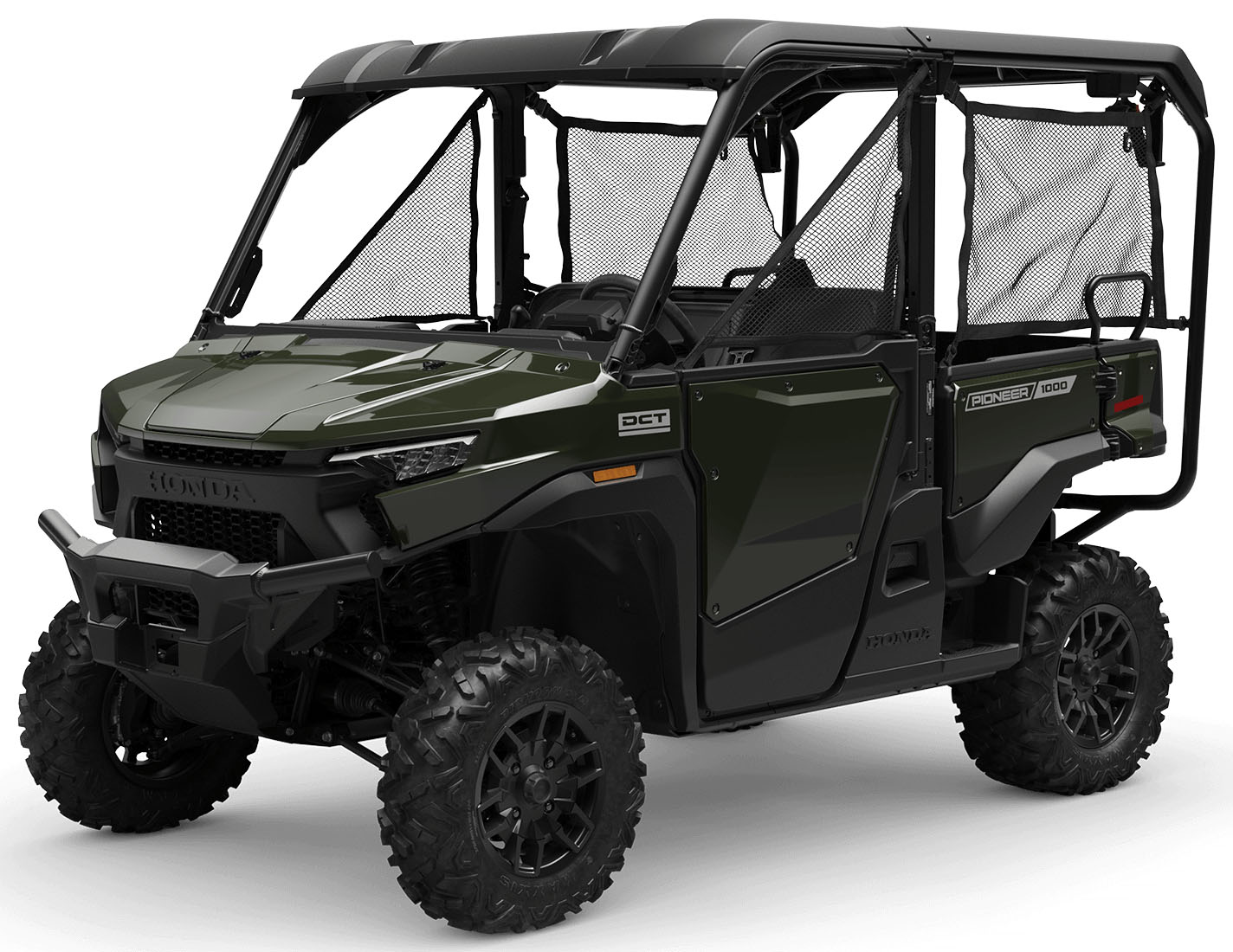
The 2026 Pioneer 1000 Deluxe itself is genuinely interesting. The headline feature is throttle-by-wire, a technology long standard in automobiles and sportbikes but still relatively novel in the utility side-by-side segment. That electronic throttle control unlocks a cascade of features belt-driven CVT competitors simply can’t match: cruise control, a variable speed limiter, a speed-limiter key for less experienced operators, and smoother integration with Honda’s automatic Dual Clutch Transmission.
That DCT remains Honda’s secret weapon in this space. While Polaris, Can-Am, and Kawasaki rely on conventional CVT setups, Honda stubbornly sticks with its dual-clutch gearbox — a genuine mechanical differentiator that provides engine braking and a more car-like driving experience. Pairing it with throttle-by-wire should make the whole powertrain feel substantially more refined.
Available in three-seat and five-seat configurations, the Deluxe also gets new Pro-Connect mounting points in the bed, a relocated exterior fuel cap, additional underseat storage, improved electric power steering, and updated bodywork. Dealer listings already show the five-seat model at $22,399 MSRP before a $1,295 destination charge, putting it squarely in premium utility territory. Units are expected in dealerships by May.
We are not just building products here — we are setting the standard for quality, safety and execution that customers around the world expect from Honda,” said Travis Lee, the plant’s site lead. It’s a boilerplate quote, but the underlying point is legitimate. This factory has been producing powersports equipment since it launched the Foreman 400 ATV in 1998. It later added ATV engine production and the AquaTrax personal watercraft before pivoting to side-by-sides in 2013.
The side-by-side market has become fiercely competitive. Polaris dominates volume. Can-Am keeps pushing technology boundaries.
Kawasaki and Yamaha fight for the value-conscious buyer. Honda has historically been the conservative choice — the one your neighbor recommends because his hasn’t broken in eight years. The 2026 Pioneer 1000 Deluxe signals that Honda is no longer content to win on reliability alone.
Throttle-by-wire, cruise control, and a modular accessory bed system suggest a company that finally heard its customers asking for more sophistication without sacrificing durability. Whether this is enough to claw back market share from Polaris and Can-Am remains to be seen. But Honda is making its stand from a factory floor in small-town South Carolina, built by workers who have been doing this for nearly three decades, and that continuity counts for something in an industry increasingly defined by churn.
Share this Story