
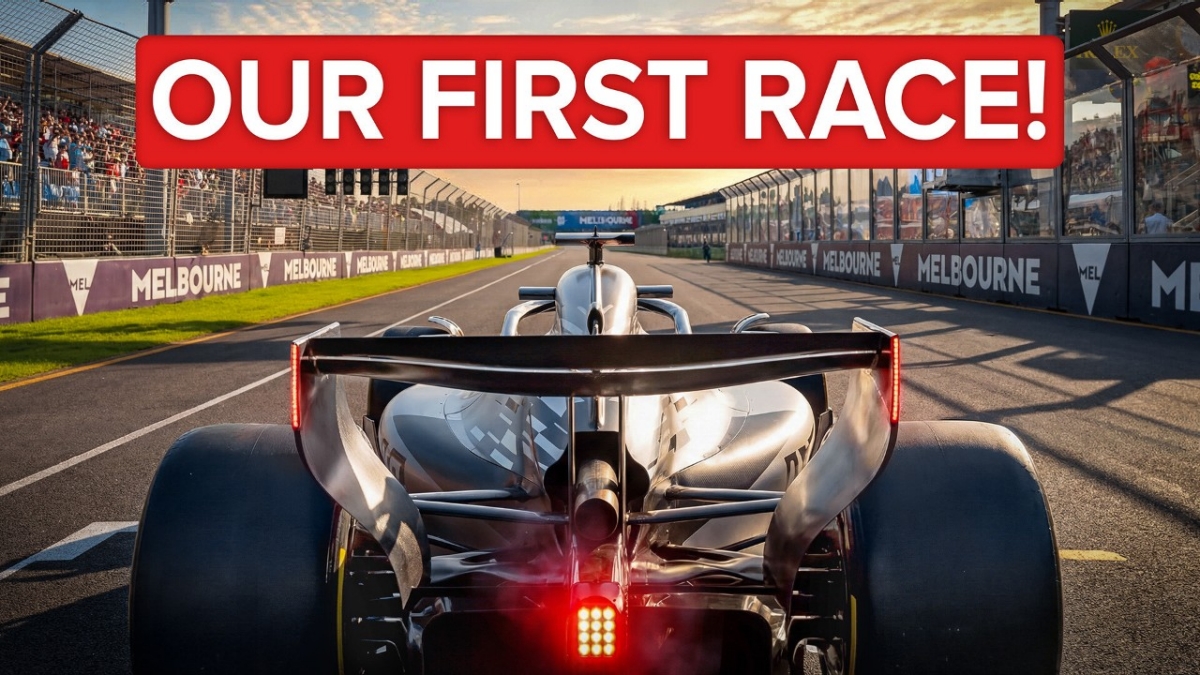


Three hundred and sixty-six days. That’s how long it took the Cadillac Formula 1 Team to go from boardroom aspiration to two cars on a live grid in Melbourne. General Motors wants you to feel the goosebumps, but the reality is more complicated.
The team’s season-opening appearance at the Australian Grand Prix marks the first new constructor entry in Formula 1 since Haas joined in 2016. GM rolled out its CEO, Mary Barra, to stand trackside for the cameras. It deployed Simon Pagenaud, the 2019 Indy 500 winner, as a simulator test driver.
It split operations across three continents — Charlotte, Silverstone, and Albert Park. The machinery of spectacle was running at full tilt. But spectacle and speed are different currencies in Formula 1.
Cadillac’s own messaging carefully uses the phrase “promising start” without attaching a single lap time, finishing position, or competitive benchmark. The latest episode of the team’s branded documentary series, “What Makes Fast,” focuses almost entirely on emotion and logistics. The nail-biting buildup, the world-spanning journey, the “history-making” moment of simply showing up — nowhere in the official account will you find a result.
That silence speaks volumes. In a sport where milliseconds get carved into mythology, the absence of hard numbers suggests the cars weren’t exactly threatening the podium. Getting to the grid is genuinely impressive, but staying relevant on it is another matter entirely.
The 2026 F1 regulations, with sweeping new aerodynamic and power-unit rules, were supposed to be the great equalizer. Every team on the grid is adapting to radical ground-effect changes and a heavier reliance on electrical energy recovery. Cadillac bet that starting fresh under new rules would narrow the gap to established juggernauts like Red Bull, Mercedes, and Ferrari.
History says otherwise. Haas spent years mired at the back despite partnering closely with Ferrari. Toyota poured billions into its F1 program from 2002 to 2009 and never won a race. Manufacturer money and genuine intent are necessary but nowhere near sufficient.
GM has deep pockets and a motorsport pedigree stretching back decades across NASCAR, IndyCar, and sports car racing. Its Charlotte Technical Center is a serious facility. Its Silverstone headquarters puts it in the geographic heart of F1’s engineering corridor.
The infrastructure is real. What remains unproven is whether a team born this fast can mature fast enough.
The development war in F1 is relentless. Wind tunnel hours are capped, CFD runs are regulated, and budget caps constrain spending. But the teams at the front have decades of institutional knowledge baked into their processes — the kind of tribal wisdom that doesn’t transfer through a hiring spree, no matter how aggressive.
Cadillac’s first race happened. Two cars started. That alone required an extraordinary mobilization of people, capital, and engineering talent across a timeline most paddock insiders considered borderline impossible.
Credit where it’s due. But Formula 1 doesn’t hand out trophies for showing up.
The documentary series can frame the debut as the beginning of an incredible journey. The stopwatch will decide whether it’s actually the start of a competitive one. The next few races will reveal whether Cadillac is a constructor building toward genuine pace or a very expensive marketing exercise with wheels.
Melbourne was the easy part. The hard part is every Sunday from here on out.


Share this Story