About This Tesla Model 3 Build
We love featuring real builds from real owners. This Red Tesla Model 3 sits on a set of 20×9 and 20×10.5-inch Vossen HF-2 wheels, and the result speaks for itself.
The owner chose Vossen for a reason. This brand delivers serious quality and a design language that turns heads at every car meet. We see hundreds of Tesla Model 3 builds come through WheelFront every month, but this one stands out. The combination of the Red exterior with the Vossen HF-2 creates a look that balances aggression with elegance.
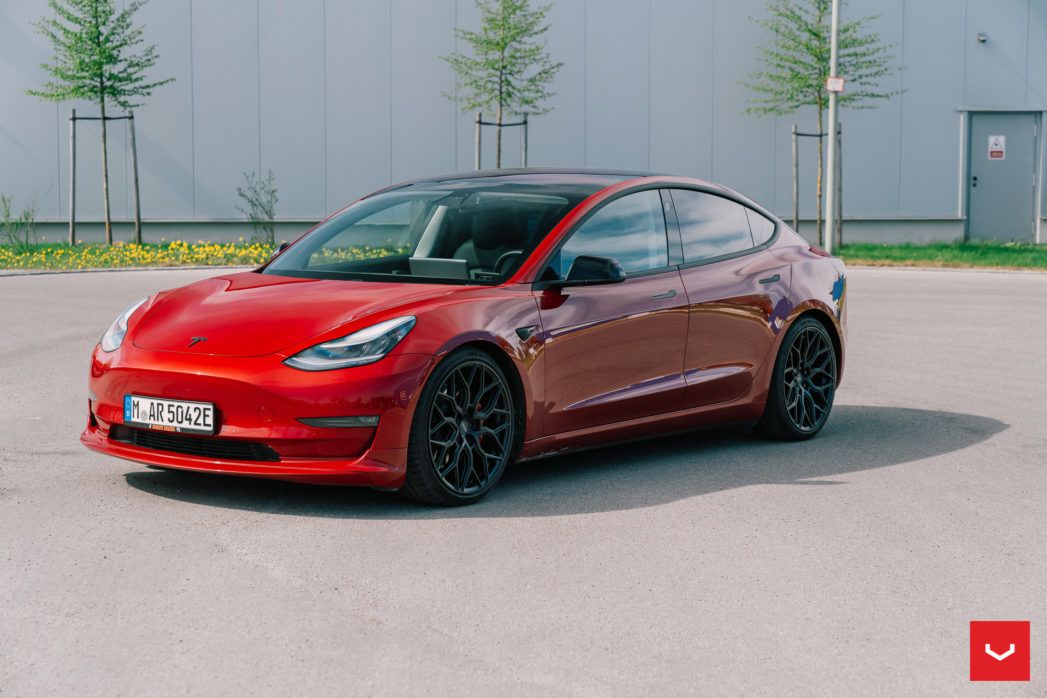
Fitment Breakdown: Vossen HF-2 on the Tesla Model 3
I stood right next to this Model 3 at the show last weekend, and the fitment is spot on. We are looking at a 20x9 front and a 20x10.5 rear setup. These Vossen HF-2 wheels fill those arches perfectly without any gaudy poking.
The wider 10.5-inch rear gives the car a muscular stance that the factory setup lacks. We verified the offsets, and they clear the rear fender liners with room to spare. You will not deal with any annoying rubbing during hard cornering.
The caliper clearance on the Model 3 can be a nightmare for some wheels. These HF-2s provide ample space for the factory Tesla brakes. You do not need to mess around with risky wheel spacers here.
I really like the hub-centric design of these wheels. They bolt straight onto the Tesla hub without needing those cheap plastic rings. That makes for a smooth ride at highway speeds.
The concave profile on the rear wheel is what makes this build pop. The deep barrel lip depth creates a sharp contrast against the flatter front spokes. It gives the car an aggressive, rear-biased profile.
This car sits on lowering springs, which tightens that fender gap significantly. If you run stock suspension, the wheels might look a bit tucked. I always suggest a drop if you want this specific aesthetic.
Be careful with your tire selection on the 10.5-inch rear. We noticed the owner went with a slight stretch to keep the sidewall tucked under the fender. It keeps the paint clean and prevents any fender damage.
What We Recommend for Tesla Model 3 Owners
If you want to upgrade your Tesla, start with your goals. A staggered 20-inch setup like this one looks incredible but hurts your range slightly. We think the visual trade-off is worth every penny.
Stick to the 20x9 front and 20x10.5 rear if you want that aggressive look. If you value efficiency, look at a 19-inch square setup instead. That keeps your rotation patterns simple and your tires cheaper.
Offset is everything when buying aftermarket wheels. We find that an offset in the high 30s to low 40s works best for the Model 3. Avoid going too low or you will deal with rubbing and scrub radius issues.
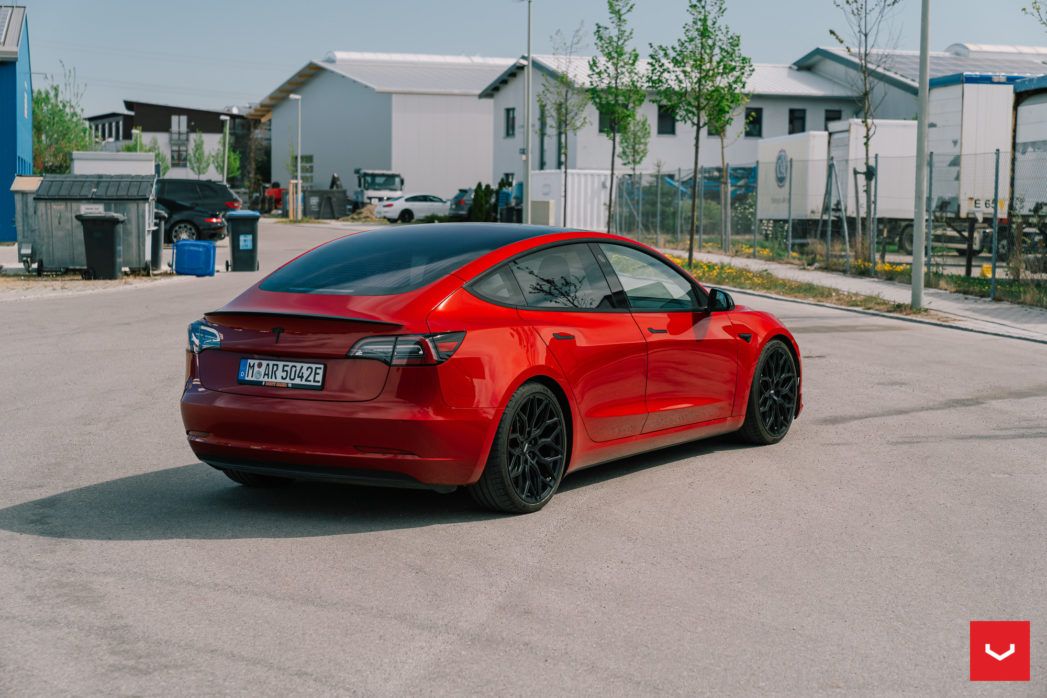
Don't fall for the cheap knock-off wheels you see on auction sites. You need a flow-formed wheel like the Vossen HF-2 to handle the instant torque of a Tesla. Cheap wheels will crack under the weight of those batteries.
When you pick tires, think about your daily commute. A performance tire is great, but a wider tread width can lead to more road noise. We always choose a high-end touring tire for a daily driver.
Finally, check your lug nuts before you hit the road. Teslas use a specific thread pitch that catches many first-time builders off guard. Make sure your shop uses the correct hardware for these wheels.
Style and Build Analysis
The Satin Black finish against the bright Red body is a classic look. It creates a high-contrast theme that screams performance. I personally think Satin is better than Gloss because it hides brake dust much better.
The HF-2 design features these sharp, split-spoke lines that draw your eye inward. On a Red car, these spokes look like they are carving up the asphalt. It is a very deliberate, surgical design choice.
When the car is sitting still, the stance looks menacing. It gives the Model 3 a much lower center of gravity visually. It stops looking like an appliance and starts looking like a driver's car.
I have seen plenty of Teslas with chrome wheels, but they just do not work. The black-on-red theme keeps the car looking cohesive and refined. It avoids that cheap "tuner" look and leans into a clean, modern style.
This build proves that you do not need a widebody kit to make a Tesla look unique. A great set of wheels and a smart drop change the entire personality of the vehicle. It is simple, effective, and perfectly executed.
Why We Love This Build
Seeing this Red Model 3 roll into the sun was a total highlight. The Satin Black Vossen wheels catch the light just enough to highlight their depth. Every time the car moves, the proportions look absolutely dialed in.
We love this build because it stays true to the car while elevating its presence. It turns a common commuter into a head-turning machine that commands respect on the road. The fitment is flawless, and the color combination is timeless.
If you want a car that looks fast even while parked, this is your blueprint. Grab these wheels, drop the suspension, and watch your car transform. This is how you build a Model 3 the right way.
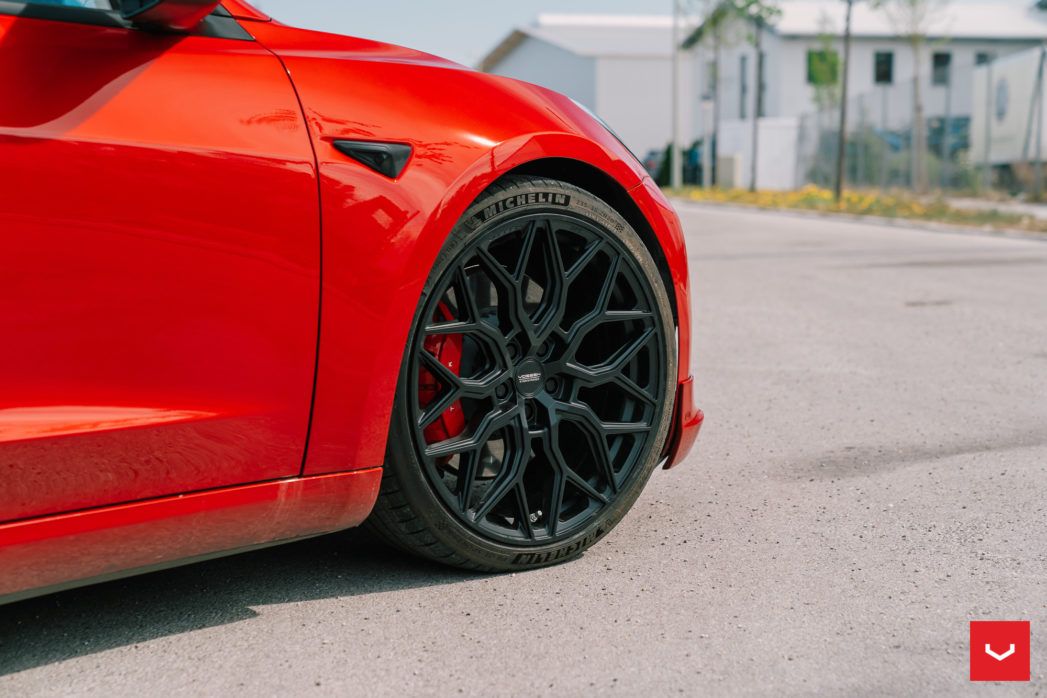
Full Specs Breakdown
Here is exactly what this owner is running. We break down every detail so you can replicate this build or use it as a starting point for your own setup.
- Car Make & Model: Tesla Model 3
- Vehicle Color: Red
- Wheel Brand & Model: Vossen HF-2
- Wheel Size: 20×9 and 20×10.5
- Offset: Contact dealer
- Wheel Finish: Satin Black
Before You Buy: Fitment Checklist
We talk to Tesla Model 3 owners every day. These are the questions we hear most before they pull the trigger on new wheels.
Will 20×9 and 20×10.5-inch wheels fit my Tesla Model 3? Yes, but fitment depends on width, offset, and tire size working together. A wrong offset means rubbing. A wrong tire size means poor handling. Always verify all three.
Do I need to modify my fenders? That depends on your offset and suspension. A conservative offset with stock ride height usually fits without modification. Go aggressive and you may need to roll or pull your fenders.
Can I daily-drive this setup? Absolutely. Thousands of Tesla Model 3 owners run 20×9 and 20×10.5-inch wheels every day. The key is choosing the right tire with enough sidewall to absorb road imperfections.