About This Mazda 3 GT 2018 Build
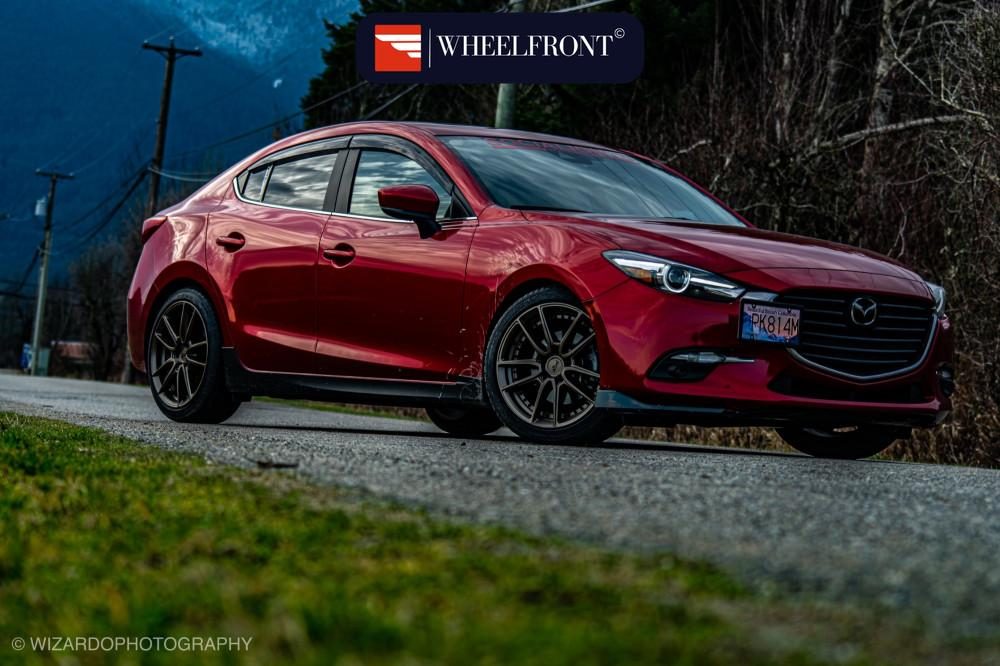
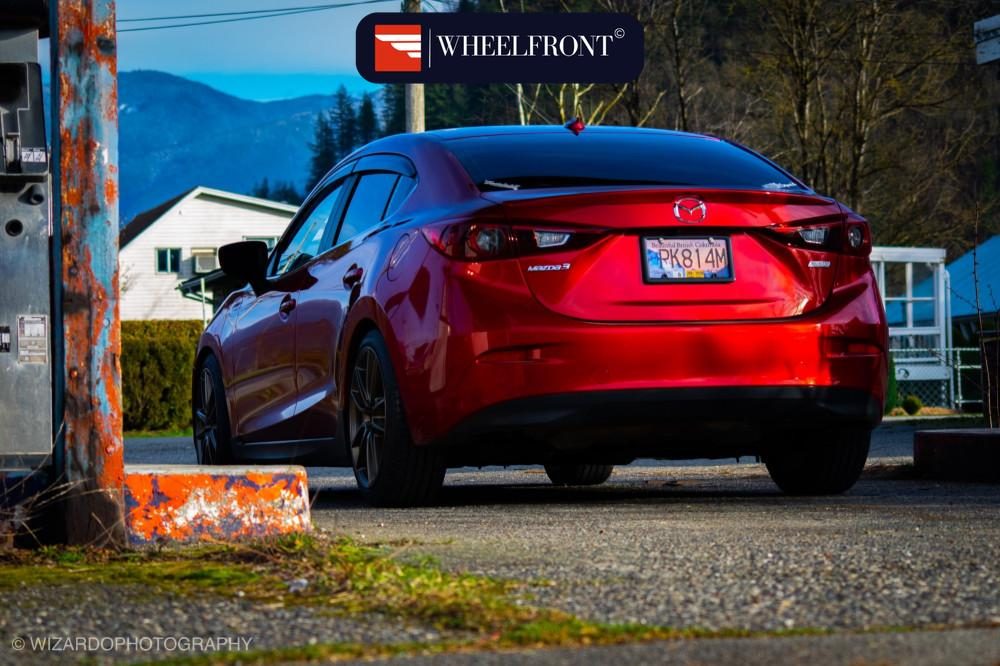
We love featuring real builds from real owners. This Mazda 3 GT 2018 sits on a set of 18×8 / 18×8-inch Niche DFS wheels, and the result speaks for itself.
The owner chose Niche for a reason. This brand delivers serious quality and a design language that turns heads at every car meet. We see hundreds of Mazda 3 GT builds come through WheelFront every month, but this one stands out. The combination of the exterior with the Niche DFS creates a look that balances aggression with elegance.
Fitment Breakdown: Niche DFS on the Mazda 3 GT 2018
I stood right next to this Mazda 3 at the last show, and the fitment is spot on. We are looking at an 18x8 setup all around with a +40 offset. This square configuration keeps the handling predictable and makes tire rotations a breeze.
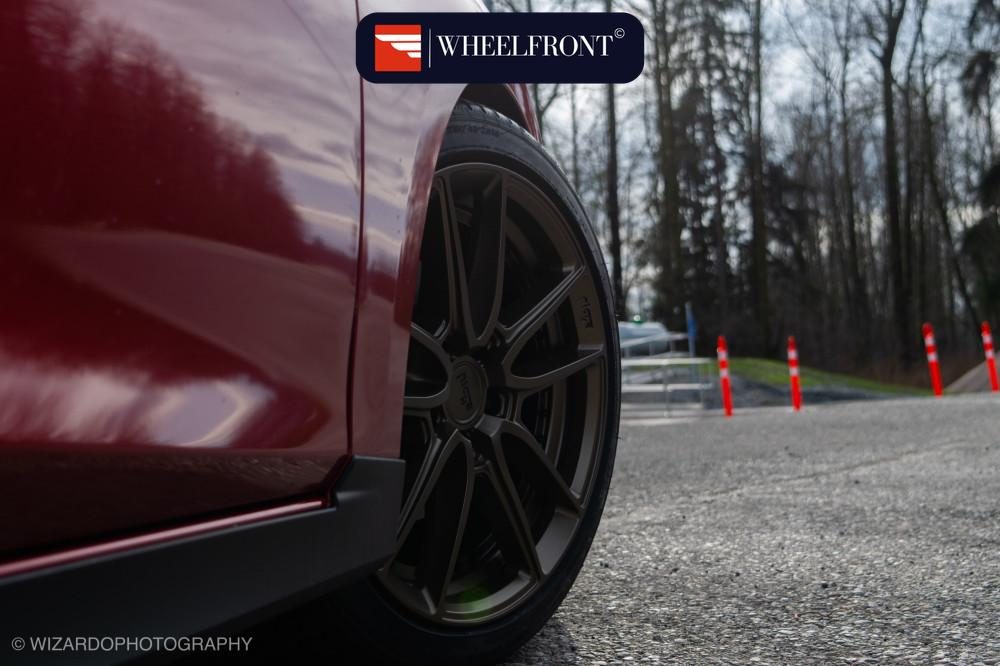
The +40 offset pushes the wheels just enough to fill those arches properly. You lose that sunken look that plagues the stock Mazda wheels. The stance looks aggressive without needing any crazy fender modifications.
Caliper clearance is a non-issue with the Niche DFS design. The spokes arch outward, providing plenty of room for those GT brakes. You do not need to worry about scraping your calipers here.
The hub bore sits perfectly, so we did not even need hub rings for this install. It bolts right up like it came from the factory. That kind of precision makes the installation process totally painless.
With those lowering springs installed, the gap vanishes completely. The car sits low, but it keeps enough travel to avoid hitting the liners. You get that sleek look without sacrificing the ride quality too much.

I checked the inner clearances while the car sat on the lift. There is no contact with the strut housings or the sway bar links. Everything clears with room to spare even under full lock.
Watch out for steep driveways, though. Those lowered arches bring the bumper closer to the asphalt than you might expect. Drive smart, and this setup will stay pristine for years.
What We Recommend for Mazda 3 GT 2018 Owners
If you want to upgrade your Mazda 3, stick to the 18-inch diameter. It strikes the perfect balance between comfort and performance. Anything larger usually ruins the ride quality on these city streets.
Stay away from staggered setups on this platform. The Mazda 3 is front-wheel drive, and a square setup keeps the car balanced. You want the same width on all four corners for predictable turn-in.
Aim for an offset between +38 and +42 for the best visual impact. These numbers put the wheel flush with the fender line. It gives the car that wide, planted look we all crave.
Avoid excessive tire stretch if you actually drive your car hard. We prefer a meaty sidewall that protects the rim from potholes. A 225/40R18 tire fits these wheels perfectly and keeps the speedometer accurate.
Do not cheap out on lug nuts when you swap your wheels. Get a high-quality set of steel lugs to ensure everything stays tight. Cheap aluminum ones strip easily and can leave you stranded at the track.
Finally, verify your alignment once the springs settle. Dropping the car changes your camber specs, which will eat your tires if you ignore it. A quick alignment job saves you hundreds in wasted rubber.
Style and Build Analysis
The bronze finish on these Niche DFS wheels is pure class. It pops against the body paint without looking tacky or loud. Bronze is the perfect middle ground between subtle black and flashy chrome.
The design of the DFS spoke pattern creates a sense of constant movement. Even when the car sits still, the wheels look like they are spinning. That angular geometry complements the sharp lines of the Mazda 3 perfectly.
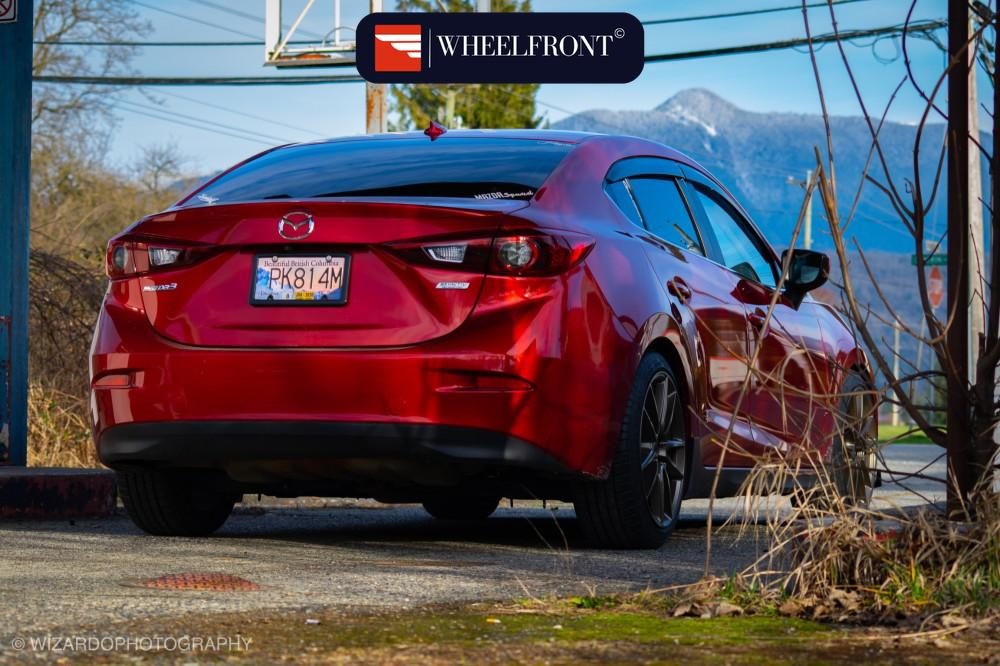
I love how the light hits the metallic bronze clear coat. It changes shade depending on the time of day, ranging from deep brown to a glowing amber. It turns the wheels into the focal point of the entire car.
Most builds we see go for boring silver or black. This owner took a risk with the bronze and it paid off big time. It sets this Mazda apart from every other hatch in the parking lot.
The proportions feel right because the wheel size matches the car's physical footprint. It does not look like a cartoon car with massive rollers. It looks like a factory-upgraded model built by someone with actual taste.
Why We Love This Build
This Mazda 3 captures everything we love about the car scene. It sits low, the bronze wheels glow in the afternoon sun, and the fitment is surgically precise. Seeing it parked at the show made me stop and walk back just to take another look. It proves that you do not need a widebody kit to turn heads.
You can tell the owner put real thought into every single bolt. The Niche DFS wheels fill the arches exactly how they should, and the drop gives the car a predatory, ready-to-pounce stance. It is clean, functional, and undeniably cool.
This build inspires us to go out and get our hands dirty in the garage tonight. Stop dreaming about your perfect setup and start building it today.
Full Specs Breakdown
Here is exactly what this owner is running. We break down every detail so you can replicate this build or use it as a starting point for your own setup.
- Car Make & Model: Mazda 3 GT 2018
- Vehicle Color:
- Wheel Brand & Model: Niche DFS
- Wheel Size: 18×8 / 18×8
- Offset: 40 / 40
- Wheel Finish: Bronze
- Tires: Michelin Pilot Sport A/S 3 Plus 215/45 25.6″x8.5″ / 215/45 25.6″x8.5″
- Suspension: Lowering Springs
Before You Buy: Fitment Checklist
We talk to Mazda 3 GT owners every day. These are the questions we hear most before they pull the trigger on new wheels.
Will 18×8 / 18×8-inch wheels fit my Mazda 3 GT? Yes, but fitment depends on width, offset, and tire size working together. A wrong offset means rubbing. A wrong tire size means poor handling. Always verify all three.
Do I need to modify my fenders? That depends on your offset and suspension. A conservative offset with stock ride height usually fits without modification. Go aggressive and you may need to roll or pull your fenders.
Can I daily-drive this setup? Absolutely. Thousands of Mazda 3 GT owners run 18×8 / 18×8-inch wheels every day. The key is choosing the right tire with enough sidewall to absorb road imperfections.