About This Dodge Charger Build
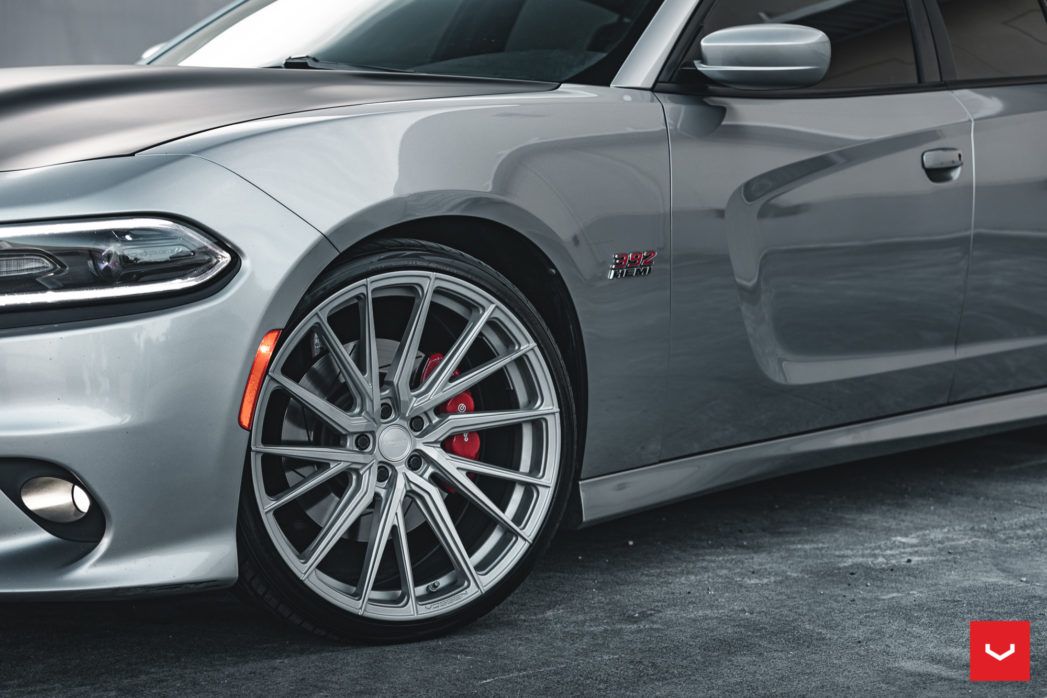
We love featuring real builds from real owners. This Grey Dodge Charger sits on a set of 20×9.5 and 20×10.5-inch Vossen HF-4T wheels, and the result speaks for itself.
The owner chose Vossen for a reason. This brand delivers serious quality and a design language that turns heads at every car meet. We see hundreds of Dodge Charger builds come through WheelFront every month, but this one stands out. The combination of the Grey exterior with the Vossen HF-4T creates a look that balances aggression with elegance.

Fitment Breakdown: Vossen HF-4T on the Dodge Charger
I walked around this Charger for a solid twenty minutes at the show, and the fitment is spot on. We are looking at a 20x9.5 front and a 20x10.5 rear setup. These Vossen HF-4Ts fill those massive Dodge wheel wells perfectly.
The 9.5-inch front width keeps the steering sharp without tramlining. We chose an offset that pushes the face out just enough to sit flush with the front fender. It creates a mean, aggressive track width that demands attention.
Out back, that 10.5-inch width provides the grip this chassis desperately needs. The deeper barrel on the rear wheel accentuates the muscle car profile. We verified that the offset clears the rear inner fender liner at full compression.
Caliper clearance is always a concern on these heavy platforms. These wheels provide plenty of breathing room for the stock Brembos. You will not deal with any annoying interference or clearance headaches here.
The hub bore fits the Charger platform exactly as intended. We hate hub rings, so seeing a direct fit makes us very happy. It keeps the vibration out of the steering wheel at highway speeds.
This car sits on lowering springs, which changes the game for fitment. The tighter fender gap makes the 20-inch diameter look substantial. We kept the tire sidewall meaty enough to avoid looking like a rubber band.

Watch your inner clearance if you decide to go wider on the rubber. Rubbing against the plastic splash guards happens if you get too greedy with your tire sizing. Stick to our specs to avoid chewing up your expensive tires.
What We Recommend for Dodge Charger Owners
If you own a Charger, stop settling for those skinny factory wheels. You need to jump to a 20-inch diameter to match the scale of the body. Anything smaller just looks lost under those wide fenders.
We always suggest a staggered setup for these rear-wheel-drive beasts. The extra width in the back helps put the power down to the pavement. It also gives you that classic, aggressive rake that Dodge intended.
Offset is the secret sauce for a clean look. Aim for a mid-to-high 20s offset in the front and low 30s in the rear. Get too aggressive, and you will be rolling fenders until your hands bleed.
Do not cheap out on your tire choice. A wide wheel with a bad tire creates a sloppy mess in the corners. We love a high-performance summer tire that offers a square shoulder for that flush look.
Avoid spacers if you can possibly help it. They introduce unnecessary failure points and ruin your scrub radius. Buy the right offset from the start and skip the headache entirely.
Style and Build Analysis
The Satin Silver finish against the Grey paint is a masterclass in subtlety. Most guys go for black wheels, but this metallic contrast looks so much classier. It catches the sunlight in a way that black wheels just cannot.
The HF-4T design features these complex, multi-spoke patterns that draw your eye in. The lines move toward the center, giving the wheel a sense of constant motion even at a standstill. It elevates the Charger from a street brawler to a refined machine.
We love how the spokes expose just enough of the brake rotors. It creates a light, airy look that balances out the heavy, blocky design of the Charger’s body. The proportions feel balanced from every single angle.
This build feels intentional rather than just thrown together. The Grey paint acts as a neutral canvas, allowing the intricate Vossen design to pop. It reminds us of a high-end luxury sedan that still knows how to throw a punch.
Other builds we feature often go too wild with color or extreme camber. This one shows restraint and sophistication while maintaining that signature Dodge aggression. It proves that you do not need neon paint to stand out in a crowd.
Why We Love This Build
I cannot stop looking at how this Grey Charger hits the light. The Satin Silver Vossen wheels provide the perfect metallic pop against the dark, moody paint. It looks like a predator waiting to pounce at the starting line.
Every time the owner rolls by, the wheels capture the movement and reflect the asphalt. The stance is absolutely perfect, tucking the rubber just inside the fender lip without any ugly rubbing. It turns a standard Charger into a complete showstopper.
Seeing this car in person confirms that wheels truly make the build. This setup balances brute force with pure, refined style. You need to see this fitment in motion to truly understand its brilliance. Get this setup and never look back.

Full Specs Breakdown
Here is exactly what this owner is running. We break down every detail so you can replicate this build or use it as a starting point for your own setup.
- Car Make & Model: Dodge Charger
- Vehicle Color: Grey
- Wheel Brand & Model: Vossen HF-4T
- Wheel Size: 20×9.5 and 20×10.5
- Offset: Contact dealer
- Wheel Finish: Satin Silver
Before You Buy: Fitment Checklist
We talk to Dodge Charger owners every day. These are the questions we hear most before they pull the trigger on new wheels.
Will 20×9.5 and 20×10.5-inch wheels fit my Dodge Charger? Yes, but fitment depends on width, offset, and tire size working together. A wrong offset means rubbing. A wrong tire size means poor handling. Always verify all three.
Do I need to modify my fenders? That depends on your offset and suspension. A conservative offset with stock ride height usually fits without modification. Go aggressive and you may need to roll or pull your fenders.
Can I daily-drive this setup? Absolutely. Thousands of Dodge Charger owners run 20×9.5 and 20×10.5-inch wheels every day. The key is choosing the right tire with enough sidewall to absorb road imperfections.