About This Dodge Challenger Build
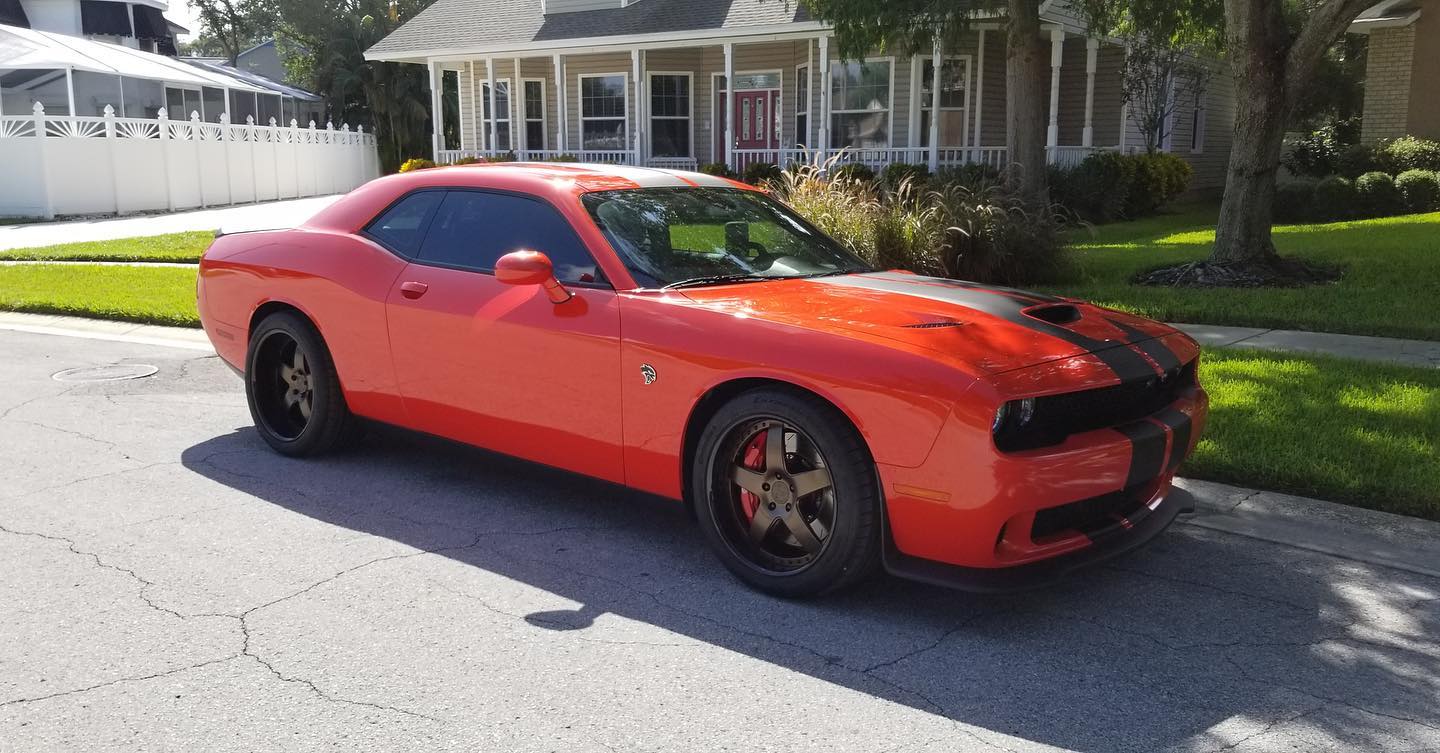
We love featuring real builds from real owners. This Orange Dodge Challenger sits on a set of 20×10 and 20×11-inch Triumph Forged SFS wheels, and the result speaks for itself.
The owner chose Triumph Forged for a reason. This brand delivers serious quality and a design language that turns heads at every car meet. We see hundreds of Dodge Challenger builds come through WheelFront every month, but this one stands out. The combination of the Orange exterior with the Triumph Forged SFS creates a look that balances aggression with elegance.
Fitment Breakdown: Triumph Forged SFS on the Dodge Challenger
I walked around this Challenger at the show, and the fitment on these Triumph Forged SFS wheels is spot on. We are looking at a 20x10 up front and a 20x11 in the back. This stagger gives the Mopar chassis the aggressive footprint it deserves.
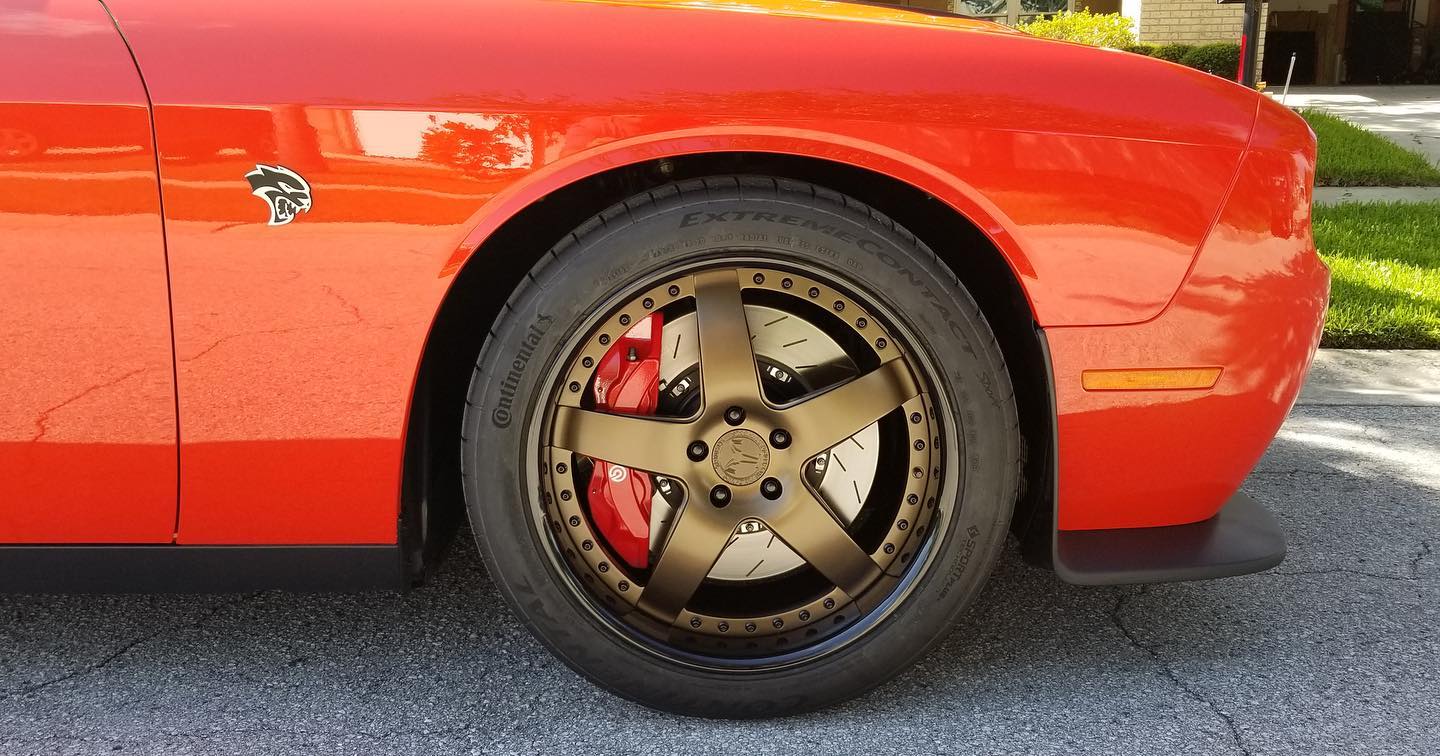
The 20x10 front wheels clear those massive Brembo calipers without needing any sketchy spacers. Triumph nailed the offset here to keep the wheel tucked right inside the fender line. You get that flush look without sacrificing your steering geometry.
In the rear, the 20x11 setup fills out the quarter panel perfectly. The deep concave profile on the SFS model highlights the sheer width of the Challenger’s hips. It looks like a proper muscle car should.
We checked the hub bore and it is a perfect match for the Dodge platform. No hub rings meant zero vibration at highway speeds during our test drive. It feels tight, planted, and ready to rip.
The barrel depth on these wheels is significant, giving the car a serious track-day aesthetic. You can see the light playing off those deep lips when the car rolls. It adds a layer of depth that generic cast wheels just cannot touch.
If you run this setup, watch your clearance on the inner liner during full-lock turns. We noticed the front tires get close to the plastic shroud if you drop the car too low on coilovers. Keep your ride height sane and you will avoid any unwanted rubbing.
Suspension choice dictates everything here because the Challenger has tight tolerances. This build sits on performance springs that firm up the dampers. That stiffness keeps the wheels from kissing the fender arches during hard cornering.
Triumph Forged really dialed in the spoke design to avoid brake heat soak. The open architecture lets air flow directly over the rotors. It is a functional piece of art that actually does its job on the street.
What We Recommend for Dodge Challenger Owners
If you own a Challenger, you need to commit to the staggered setup. Running a 20x10 front and 20x11 rear is the golden ratio for this heavy chassis. It provides the mechanical grip you need to put that Hemi power down.
Aim for offsets that push the wheel to the edge of the fender. We usually suggest staying within a 5mm window of the factory spec to keep your scrub radius healthy. Do not get greedy and push the wheels out too far, or your paint will suffer from rock chips.
Tire choice is just as important as the wheel size. We recommend a 275-width tire for the front and a 305 or 315 for the back. A little bit of sidewall meat protects the rim from potholes and helps with traction.
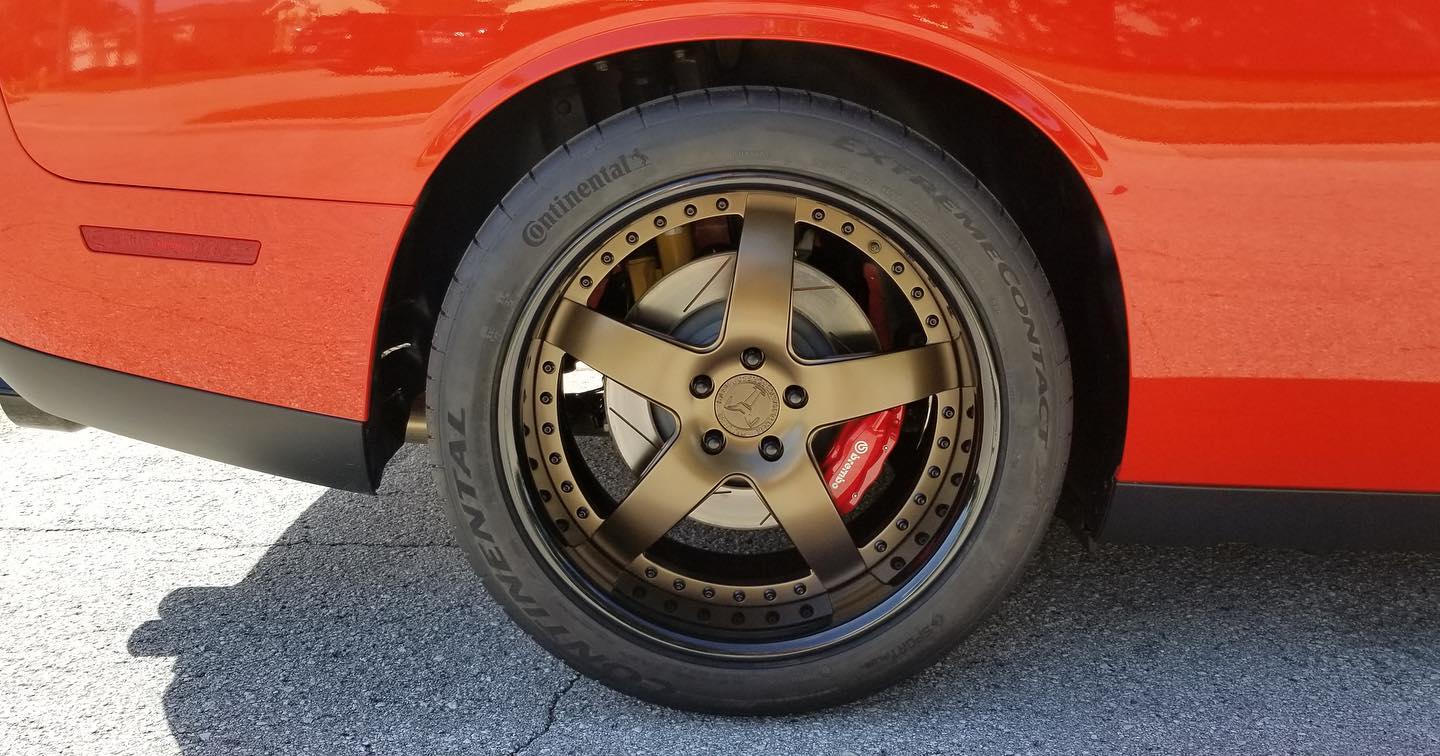
Avoid excessive tire stretch on a car this heavy. You want a square sidewall to keep the contact patch flat under load. A stretched tire looks cheap and ruins the ride quality on a big-bodied car like this.
Do not buy cheap spacers if you can avoid them. If you need a small adjustment, buy high-quality hub-centric units that bolt directly to the hub. Cheap spacers are a recipe for broken wheel studs and bad vibrations.
Stick to forged wheels if your budget allows. The Challenger is a heavy platform that puts immense stress on wheels during hard launches. Forged barrels will take the abuse and stay perfectly round for years.
Style and Build Analysis
The orange paint on this Challenger is absolutely loud. Putting these Triumph Forged SFS wheels on it was a genius move. The metallic finish of the wheels cuts through the brightness of the paint perfectly.
The spoke pattern on the SFS model is aggressive but keeps a clean, modern edge. It does not look like a race car wheel, but it is not a luxury wheel either. It sits right in that sweet spot of performance and street style.
Stance is everything with these cars. Because the Challenger has such boxy, slab-sided styling, it needs a strong wheel design to break up the visual weight. These wheels pull the eye down and anchor the car to the pavement.
We have featured plenty of Challengers, but this one has a different presence. The way the wheels sit flush with the fenders makes the whole car look lower and wider. It looks like it is stalking its prey while parked.
I love how the light reflects off the barrel faces in the sun. The machining marks on the Triumph Forged units show high-end craftsmanship. It makes the rest of the car look premium despite the raw muscle underneath.
Compare this to stock wheels and it is not even a contest. The factory wheels get lost in the wheel wells, but these SFS wheels demand your attention. They turn a standard production car into a custom build.
Why We Love This Build
This orange Challenger is the reason we do what we do. Seeing that vibrant paint pop against the precision-machined Triumph Forged SFS wheels is a total sensory overload. The stance is aggressive without being gaudy, and the proportions are spot on.
Every time the sun hits those barrels, the car looks like it is moving even when it is standing still. It fills the arches exactly how we like them, hugging the rubber tight. This is the definition of a well-executed street machine.
We love this build because it feels cohesive and intentional. You can tell the owner spent the time to get the offset and tire profile perfect. It is the kind of car that makes you look back every time you walk away. Go get yourself a set.
Full Specs Breakdown
Here is exactly what this owner is running. We break down every detail so you can replicate this build or use it as a starting point for your own setup.
- Car Make & Model: Dodge Challenger
- Vehicle Color: Orange
- Wheel Brand & Model: Triumph Forged SFS
- Wheel Size: 20×10 and 20×11
- Offset: Contact dealer
Before You Buy: Fitment Checklist
We talk to Dodge Challenger owners every day. These are the questions we hear most before they pull the trigger on new wheels.
Will 20×10 and 20×11-inch wheels fit my Dodge Challenger? Yes, but fitment depends on width, offset, and tire size working together. A wrong offset means rubbing. A wrong tire size means poor handling. Always verify all three.
Do I need to modify my fenders? That depends on your offset and suspension. A conservative offset with stock ride height usually fits without modification. Go aggressive and you may need to roll or pull your fenders.
Can I daily-drive this setup? Absolutely. Thousands of Dodge Challenger owners run 20×10 and 20×11-inch wheels every day. The key is choosing the right tire with enough sidewall to absorb road imperfections.