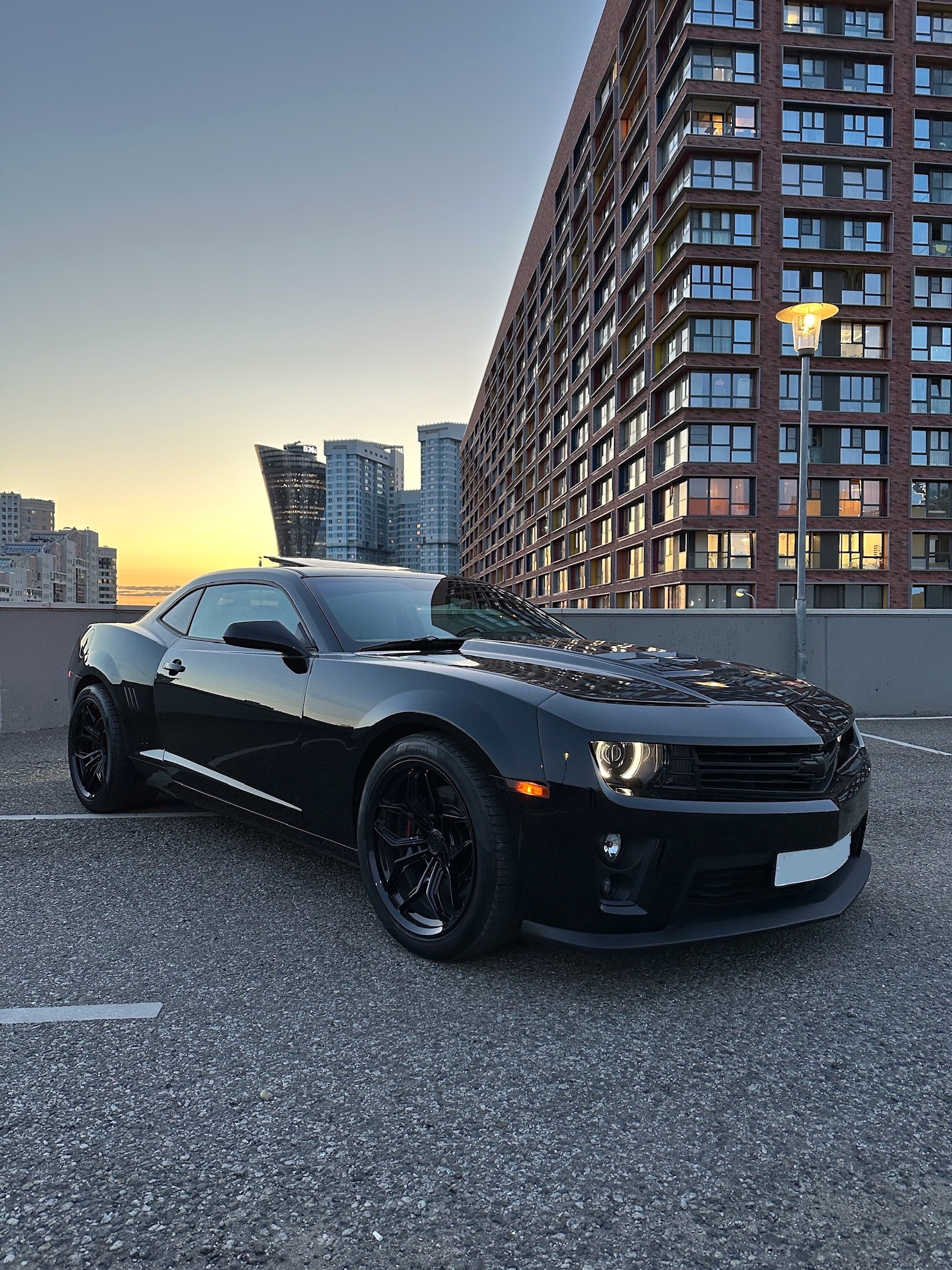
About This McLaren 650S/675LT Build
We love featuring real builds from real owners. This Yellow McLaren 650S/675LT sits on a set of 20×9 and 21×12-inch Strasse SV1 FS wheels, and the result speaks for itself.
The owner chose Strasse for a reason. This brand delivers serious quality and a design language that turns heads at every car meet. We see hundreds of McLaren 650S/675LT builds come through WheelFront every month, but this one stands out. The combination of the Yellow exterior with the Strasse SV1 FS creates a look that balances aggression with elegance.

Fitment Breakdown: Strasse SV1 FS on the McLaren 650S/675LT
I walked around this McLaren for twenty minutes just to admire the stance. We put 20x9 up front and 21x12 in the rear to get this perfect profile. These Strasse SV1 FS wheels fill the arches exactly how a supercar should.
The 9-inch front width keeps the steering sharp and responsive. We pushed the offset out just enough to sit flush with the fender line. You won't find any ugly tuck here.
That 21x12 rear setup creates a massive footprint for the 675LT. We needed custom offsets to clear the inner suspension arms while keeping the outer lip aggressive. The hub bore fits the McLaren factory specs perfectly for a vibration-free ride.
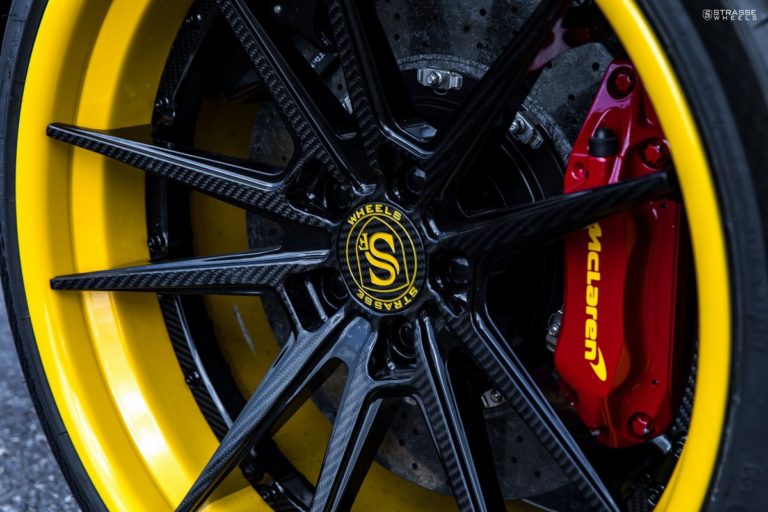
Clearing the giant carbon-ceramic calipers was our main engineering hurdle. The SV1 spoke design arches outward to provide plenty of room for those massive pistons. We didn't need any cheap spacers to clear the brakes.
We see a lot of builds that push the offset too far and kill the handling. This setup maintains the scrub radius McLaren intended for the factory geometry. You can take this car to the track without fearing a shredded fender liner.
The barrel depth on the rear wheels looks deep enough to dive into. Strasse machined these with a slight concave profile that emphasizes the rear-engine layout. It draws your eye straight to the center of the wheel.

Watch out for the front inner liner on full lock if you decide to drop the car further. We recommend a stiff spring rate to keep the tire from buzzing the fender on high-speed compressions. This fitment is aggressive, so treat it with respect.
What We Recommend for McLaren 650S/675LT Owners
Don't try to squeeze a 22-inch wheel on the rear of this chassis. You will destroy your transmission's final drive ratio and ruin the ride quality. Stick to the 20/21 combo for the best balance of looks and performance.
Always prioritize lightweight forged wheels over cheaper cast options. The McLaren suspension is incredibly sensitive to unsprung weight. Every pound you shave off at the hub makes the car feel five hundred pounds lighter in the corners.
Forget about square setups on a mid-engine platform. You need that massive rear tire width to put the twin-turbo power down to the pavement. Staggered is the only way to go.
We see too many owners run tires that are way too narrow for the rim width. Aim for a square shoulder on your tire setup to maximize your contact patch. It looks tougher and handles way better in the rain.
If you want to run spacers, just stop right there. Buy the right offset from the start so you don't compromise your wheel studs. Do it once and do it right.
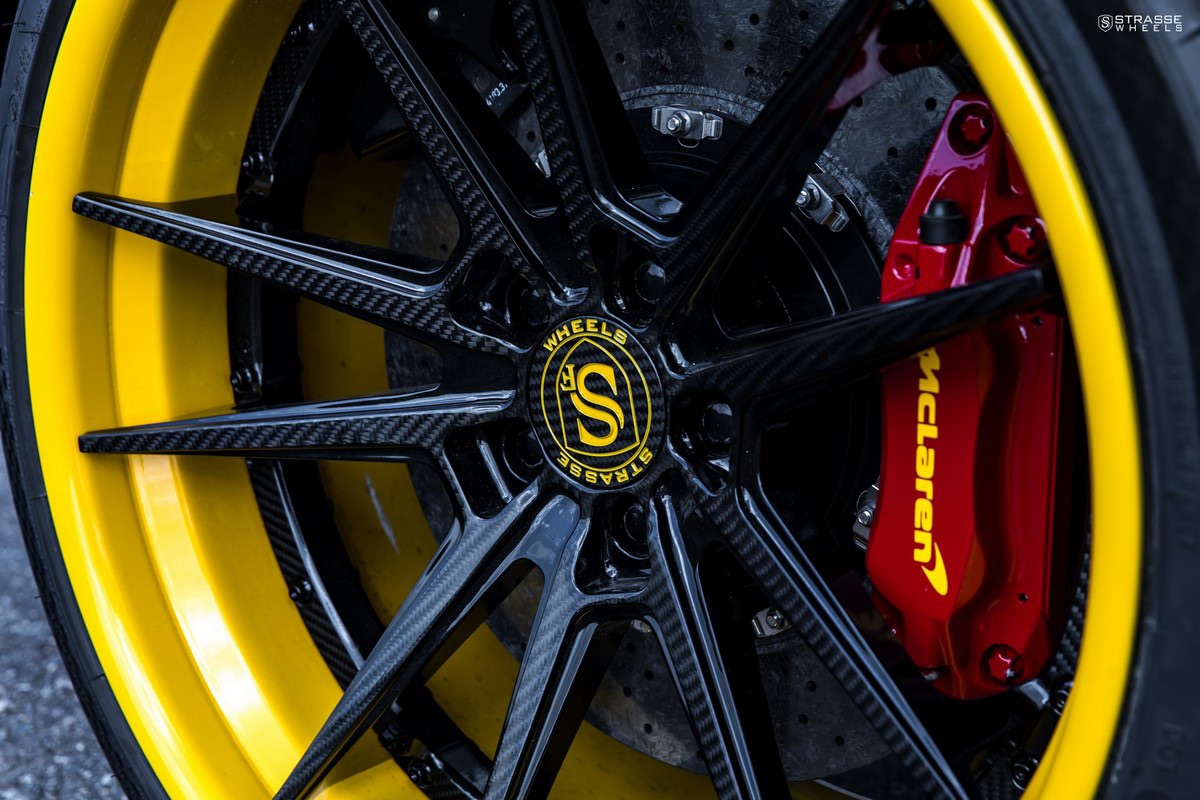
Style and Build Analysis
The Gloss Carbon Fiber finish on these Strasse wheels is absolute eye candy. It adds a technical, dark aesthetic that grounds the bright Volcano Yellow paint. You can see the weave when the sun hits the barrels directly.
We love the contrast of the Volcano Yellow pinstripe on the wheel against the matching car color. It ties the whole build together without looking like a tacky toy car. The colors match almost perfectly under direct stadium lights.
The SV1 FS spoke pattern feels light and race-inspired. It contrasts nicely with the bulky, curvy lines of the McLaren bodywork. These wheels make the car look faster even when it sits parked in the paddock.
Most builds go for standard silver or black, which gets boring fast. This specific color choice shows the owner actually thought about the final look. It turns heads because it is bold but refined.
Road presence is where this car really wins the trophy. The wider track width gives the 675LT an even more predatory stance on the road. It looks like it wants to hunt down every exotic in the zip code.
Why We Love This Build
Seeing this Yellow McLaren under the shop lights stopped me dead in my tracks. The way the Volcano Yellow paint pops against that deep Carbon Fiber finish is pure automotive art. We haven't seen a 675LT that looks this mean in a long time.
The wheels fill the arches so tightly that you could barely slide a credit card through the gap. It captures the raw, mechanical soul of the McLaren platform perfectly. Every time the light hits those spokes, the whole build feels like a spaceship.
I want this car in my garage more than almost anything else we have featured. If you have a McLaren, quit waiting and build it exactly like this. This is the gold standard for proper supercar fitment.

Full Specs Breakdown
Here is exactly what this owner is running. We break down every detail so you can replicate this build or use it as a starting point for your own setup.
- Car Make & Model: McLaren 650S/675LT
- Vehicle Color: Yellow
- Wheel Brand & Model: Strasse SV1 FS
- Wheel Size: 20×9 and 21×12
- Offset: Contact dealer
- Wheel Finish: Gloss Carbon Fiber | Volcano Yellow
Before You Buy: Fitment Checklist
We talk to McLaren 650S/675LT owners every day. These are the questions we hear most before they pull the trigger on new wheels.
Will 20×9 and 21×12-inch wheels fit my McLaren 650S/675LT? Yes, but fitment depends on width, offset, and tire size working together. A wrong offset means rubbing. A wrong tire size means poor handling. Always verify all three.
Do I need to modify my fenders? That depends on your offset and suspension. A conservative offset with stock ride height usually fits without modification. Go aggressive and you may need to roll or pull your fenders.
Can I daily-drive this setup? Absolutely. Thousands of McLaren 650S/675LT owners run 20×9 and 21×12-inch wheels every day. The key is choosing the right tire with enough sidewall to absorb road imperfections.